 admin
admin
Meryl Streep Young represents a fascinating chapter in the life of one of Hollywood’s most respected performers. Before becoming an internationally celebrated actress, she developed her craft through school productions, vocal training, college theater, and intensive study at Yale. Her early years reveal determination, versatility, and a willingness to experiment with challenging characters. Born in 1949 in Summit, New Jersey, Streep gradually transformed from an ambitious student into a professional stage performer and, eventually, a major film star. Her journey demonstrates how education, discipline, resilience, and careful artistic choices can shape an extraordinary acting career.
| Quick Bio | Details |
|---|---|
| Full Name | Mary Louise Streep |
| Born | June 22, 1949 |
| Birthplace | Summit, New Jersey, United States |
| Profession | Actress |
| Education | Vassar College and Yale School of Drama |
| College Degree | AB in Drama, cum laude |
| Film Debut | Julia (1977) |
| Breakthrough | The Deer Hunter (1978) |
| First Oscar Win | Kramer vs. Kramer (1979) |
| Known For | Dramatic range, accents, character work, stage and screen performances |
Meryl Streep Young and Her New Jersey Childhood
Meryl Streep Young begins with a childhood shaped by family encouragement and artistic curiosity. She was born to Mary Wilkinson Streep, an artist, and Harry William Streep Jr., a pharmaceutical executive. Growing up in New Jersey, she experienced a supportive environment that helped her develop confidence. Her mother especially encouraged her to believe in her abilities. Streep later described her mother as an important mentor who pushed her to work hard and pursue her goals. Those early lessons became valuable foundations for the demanding career that followed.
Family Influence During Her Early Years
The family environment surrounding Meryl Streep Young encouraged creativity and ambition. Streep had two younger brothers, Harry William Streep III and Dana David Streep, who also became actors. Her mother’s artistic background offered another important influence. Rather than simply encouraging fame, her family helped establish the belief that preparation and effort mattered. This attitude became particularly important as Streep entered competitive academic and theatrical environments. Her later success was not built solely on natural ability; it also reflected years of study, rehearsal, observation, and persistence.
Meryl Streep Young and School Performances
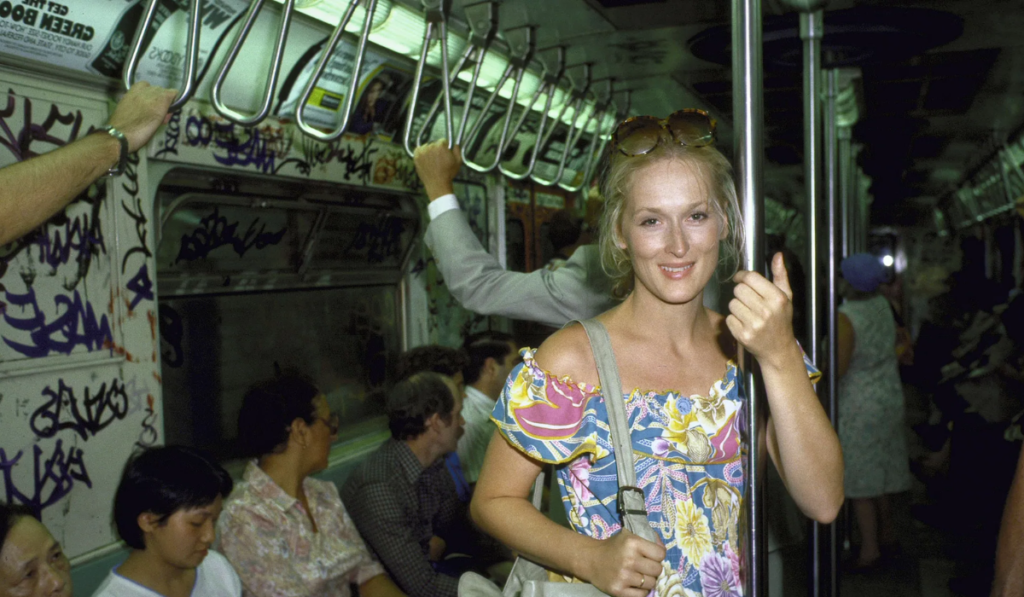
Meryl Streep Young discovered an early connection with performance through school theater. During her junior high years, she appeared in a production of The Family Upstairs. Although she did not initially view acting as a lifelong profession, stage appearances allowed her to explore different personalities and emotions. She also participated in high school productions and became increasingly comfortable performing before audiences. These experiences gave her an early understanding of timing, memorization, character development, and stage presence. They also showed that performance could become a powerful form of self-expression.
Developing Confidence as a Teenager
Meryl Streep Young was not immediately presented as the polished performer audiences would later know. Accounts of her teenage years describe a student who could be energetic, playful, and expressive while also learning how to handle self-consciousness. She participated in school activities and was selected as her high school’s homecoming queen. Her ability to perform in front of others gradually strengthened her confidence. That combination of personality and discipline became useful later, when she had to portray characters whose personalities were dramatically different from her own.
Meryl Streep Young and Her Singing Lessons
Another important part of Meryl Streep Young was her early experience with singing. At age 12, she was selected to sing at a school recital and subsequently received opera lessons from teacher Estelle Liebling. Streep studied voice for several years before eventually deciding that opera was not the artistic path she wanted. The experience nevertheless taught her an important lesson about authenticity. She later reflected on the importance of finding material she could genuinely feel and understand. This insight became central to her approach to acting and character interpretation.
Discovering Serious Acting at Vassar
Meryl Streep Young entered a more serious artistic phase at Vassar College. Although she had performed before, her interest in theater deepened considerably during college. Her appearance as Miss Julie in a campus production in 1969 attracted attention and helped demonstrate her unusual dramatic abilities. At Vassar, she studied drama while gaining practical experience on stage. The college environment allowed her to explore difficult material without the commercial pressures of professional entertainment. Her undergraduate years became a turning point that helped establish acting as her central career ambition.
Meryl Streep Young and Her Vassar Education
Meryl Streep Young benefited greatly from her academic training at Vassar College, where she earned an AB in drama cum laude in 1971. Her education combined intellectual development with practical theatrical experience. Rather than relying on appearance or natural charisma, she built a foundation based on understanding characters and dramatic structure. Her college years also gave her opportunities to work with teachers and fellow performers. This preparation helped her transition from student theater into professional acting, where expectations were considerably higher and competition was intense.
Moving Toward Yale School of Drama
Meryl Streep Young entered another demanding stage when she pursued graduate training at Yale School of Drama. The program exposed her to numerous theatrical styles and challenging roles. While studying at Yale, she appeared in many stage productions and worked various jobs to help support herself. Her workload was intense enough that she experienced health difficulties and briefly considered leaving acting to study law. Instead, she continued developing her craft. The decision proved significant because Yale became an important bridge between her student years and professional theatrical career.
Meryl Streep Young and Her Yale Stage Work
The Yale years were particularly important because Meryl Streep Young demonstrated remarkable range even before becoming a film star. She performed roles that required very different ages, personalities, physical qualities, and emotional approaches. Her repertoire included Shakespearean material and contemporary comedy. This experience helped develop the adaptability that later became one of her defining strengths. Rather than specializing in one type of character, she learned to move between genres and perspectives. That versatility became one of the most recognizable features of her professional identity.
Building a Professional Stage Career
After completing her graduate education, Meryl Streep Young moved into professional theater. Her early stage work included performances in New York, where she began establishing herself among serious theater performers. Her professional stage debut came with The Public Theater’s production of Trelawny of the ‘Wells in 1975. She continued taking demanding roles and soon gained recognition for her ability to inhabit complex characters. Her stage experience proved invaluable because theater required concentration, vocal control, memorization, and emotional consistency without the benefit of repeated film takes.
Meryl Streep Young and Her Broadway Breakthrough
Meryl Streep Young also made an important transition toward Broadway. Within a few years of graduating from Yale, she appeared in major theatrical productions and received recognition for her performances. Her stage career demonstrated that she was not simply interested in becoming a movie celebrity. She had a genuine commitment to acting as a craft. Theater allowed her to test different approaches and work directly with directors and fellow performers. These experiences strengthened her confidence and helped prepare her for the increasingly visible opportunities that arrived in television and film.
Entering Television in the 1970s
Television provided Meryl Streep Young with another opportunity to demonstrate her range. Her performance in the miniseries Holocaust in 1978 earned her a Primetime Emmy Award. The role required historical sensitivity and emotional depth, showing that she could handle serious television material as effectively as stage drama. Her success in the production helped raise her profile at a time when she was still relatively new to screen acting. It also reinforced the idea that she was capable of disappearing into characters rather than simply playing versions of herself.
Meryl Streep Young and Her Film Debut
Meryl Streep Young entered cinema with a small role in Julia, released in 1977. Although the part was limited, it represented an important beginning in her film career. Film required a different acting rhythm from theater, with performances created through close-ups, editing, and repeated takes. Streep adapted quickly. Her early film appearances suggested that she possessed the subtlety necessary for the camera while retaining the discipline developed through stage training. The experience opened the door to larger opportunities and established her as a promising new screen performer.
The Deer Hunter Becomes a Major Turning Point
The Deer Hunter was the major breakthrough for Meryl Streep Young on the big screen. Released in 1978, the film featured Streep alongside Robert De Niro and Christopher Walken. Her performance as Linda earned her first Academy Award nomination for Best Supporting Actress. The recognition was remarkable because she was still early in her film career. Critics and audiences began noticing her ability to create emotionally complicated characters with restraint and realism. The film transformed her from a promising theater actress into one of the most closely watched young performers in Hollywood.
Meryl Streep Young and Kramer vs. Kramer
Kramer vs. Kramer became another defining moment for Meryl Streep Young. Released in 1979, the film centered on divorce, parenting, family responsibilities, and changing gender expectations. Streep played Joanna Kramer opposite Dustin Hoffman. She approached the role with considerable seriousness and reportedly pushed for changes that gave Joanna greater emotional complexity. Her performance received widespread acclaim, and she won the Academy Award for Best Supporting Actress. The film became a commercial and critical success, establishing Streep as a major Hollywood talent rather than simply an emerging actress.
Working in Manhattan and Other Early Films
Meryl Streep Young continued expanding her film résumé during the late 1970s. In Manhattan, she worked with Woody Allen and played Jill Davis, a character whose relationship history and personal life added another layer to the story. She also appeared in The Seduction of Joe Tynan. These projects demonstrated that Streep was willing to move between serious drama and more unconventional material. Instead of limiting herself to a predictable screen image, she accepted roles that allowed her to explore different personalities, relationships, and storytelling styles.
Meryl Streep Young and Her Acting Technique

One of the most interesting aspects of Meryl Streep Young was her developing approach to character work. Her early training emphasized careful preparation, memorization, physical awareness, vocal control, and emotional understanding. She also became known for her ability to reproduce accents and speech patterns. These skills allowed her to portray characters from different cultures, social backgrounds, and historical periods. Her method was not simply about imitation. She sought to understand the motivations behind each character, which helped make her performances convincing even when the roles were far removed from her own personality.
Learning Through Difficult Roles
Meryl Streep Young frequently chose characters that demanded emotional complexity. Instead of selecting only glamorous or comfortable parts, she accepted roles involving grief, family conflict, social pressure, historical trauma, and complicated relationships. This willingness to take risks became an important part of her reputation. Early in her career, she learned that powerful performances often required vulnerability and careful research. Her ability to confront difficult material without making the character feel artificial became one of the qualities that distinguished her from many performers of her generation.
The French Lieutenant’s Woman Expands Her Range
The French Lieutenant’s Woman, released in 1981, gave Meryl Streep Young an opportunity to play dual roles. She portrayed Sarah Woodruff and actress Anna, requiring her to create distinctions between characters within the same film. Her performance earned an Academy Award nomination for Best Actress. The project demonstrated how quickly she was developing into a leading performer capable of carrying sophisticated stories. It also reinforced her reputation for technical precision and emotional versatility. Her early career was becoming defined by challenging choices rather than a single recognizable screen persona.
Meryl Streep Young and Sophie’s Choice
Sophie’s Choice became one of the most celebrated performances associated with Meryl Streep Young. In the 1982 film, she portrayed Sophie Zawistowski, a Polish immigrant carrying profound trauma from the Holocaust. Streep’s performance required linguistic precision, emotional control, and an understanding of a deeply tragic character. She won the Academy Award for Best Actress for the role. The performance established her as an exceptional dramatic actress and became an important milestone in her career. It also demonstrated how her early theatrical training could translate into powerful, intimate film acting.
Developing a Reputation for Versatility
Meryl Streep Young became increasingly associated with versatility because she refused to remain within one genre. Her early filmography moved through war drama, family stories, romantic material, historical subjects, psychological drama, and comedy. This range was supported by her command of accents and her ability to change physical mannerisms. Critics often emphasized her chameleon-like qualities. The foundation for that versatility was established before international fame, during years of school theater, university study, Yale training, and professional stage work. Her early career therefore explains much of the consistency seen in later decades.
The Importance of Preparation
Preparation played a central role in Meryl Streep Young’s development. Her education exposed her to classical theater, contemporary plays, comedy, drama, and physically demanding performances. At Yale, she reportedly appeared in numerous productions while managing outside work. That demanding schedule required organization and endurance. The habits developed during those years helped her approach major film roles with confidence. Her career illustrates that exceptional performances rarely appear overnight. They are usually supported by years of practice, mistakes, experimentation, and continuous learning.
Balancing Personal Life and Career
During the late 1970s, Meryl Streep Young experienced major personal changes alongside her professional rise. She married sculptor Don Gummer in 1978, and the couple later raised a family. At the same time, her acting career was accelerating rapidly through The Deer Hunter, Kramer vs. Kramer, television work, and stage opportunities. Managing personal responsibilities while building an international career required substantial adjustment. Her story illustrates that professional success can develop alongside major life transitions rather than occurring separately from them.
Meryl Streep Young and Her Approach to Fame
Early recognition could have encouraged a performer to pursue celebrity above craft, but Meryl Streep Young remained strongly associated with acting itself. Her early choices focused on interesting characters and demanding scripts. A 1979 profile described her as still enjoying the ability to move around without being widely recognized, even as her career was rapidly gaining momentum. That period captures an important transition: she was becoming famous while still learning how to navigate the attention surrounding a rising Hollywood career.
Why Her Early Years Still Matter
Meryl Streep Young remains an important search topic because her early years explain the origins of her extraordinary career. Her childhood confidence, vocal training, Vassar education, Yale studies, stage performances, television work, and first films all contributed to the actress audiences eventually recognized. None of these stages alone created her success. Instead, they formed a connected path of preparation and opportunity. Understanding that path makes her later achievements more meaningful because it shows that her celebrated performances were built on decades of disciplined artistic development.
Lessons From Her Early Acting Journey
The story of Meryl Streep Young offers several useful lessons for aspiring performers. First, formal education can provide valuable foundations, but practical experience is equally important. Second, versatility can create opportunities when the entertainment industry changes. Third, rejection or uncertainty does not necessarily predict future success. Finally, authentic character work can be more durable than chasing temporary trends. Streep’s early career shows how patience, training, resilience, and thoughtful role selection can gradually transform an ambitious performer into an enduring artist.
Lasting Influence of Her Young Career
The early career of Meryl Streep Young laid the foundation for decades of acclaimed work. Within only a few years of beginning professional acting, she had earned major stage recognition, an Emmy, Oscar nominations, and an Academy Award victory. Her early performances established patterns that continued throughout her career: versatility, linguistic skill, emotional intelligence, and willingness to embrace challenging roles. The National Women’s History Museum notes that she built a distinctive career across theater, film, and television, highlighting the breadth of her professional achievements.
From Rising Actress to Hollywood Icon
Meryl Streep Young ultimately represents the period when talent was becoming reputation and reputation was becoming legacy. Her journey from New Jersey schools to Vassar, Yale, New York theater, television, and major films was remarkably rapid. By the early 1980s, she had already demonstrated that she could compete at the highest level of acting. Her later career would bring many more memorable performances, but the essential qualities were already visible in these formative years. Her rise remains a powerful example of how preparation can meet opportunity at exactly the right moment.
What Made Her Early Performances Special?
The lasting appeal of Meryl Streep Young comes from the combination of technical skill and emotional authenticity. She could alter an accent, physical posture, vocal rhythm, and emotional expression while keeping the character believable. Her early performances rarely felt like simple demonstrations of technique. Instead, the technique served the story. This balance helped her move successfully between theater and cinema. It also explains why audiences and critics recognized her as a serious performer even when she had only a small number of film credits.
Her Young Career Compared With Modern Stardom
Meryl Streep Young developed her career in an entertainment environment very different from today’s social-media-driven culture. There were fewer opportunities for instant global visibility, and actors often built reputations through theater, television, critics, and carefully selected film roles. Her path therefore involved gradual professional recognition. She did not need to maintain a constant online presence to establish credibility. Instead, performances themselves became the primary evidence of her talent. Her career demonstrates that long-term artistic reputation can be built through consistent work rather than immediate digital popularity.
Frequently Asked Questions
1. When was Meryl Streep born? — • Meryl Streep was born on June 22, 1949, in Summit, New Jersey.
2. Where did Meryl Streep study acting? — • She studied drama at Vassar College and earned an MFA with honors from Yale School of Drama.
3. What was Meryl Streep’s first film? — • Her first film role was in Julia, released in 1977.
4. Which movie gave Meryl Streep her first Oscar win? — • She won her first Academy Award for Kramer vs. Kramer in 1980.
5. Why is Meryl Streep’s early career important? — • Her early stage, television, and film work established the versatility and discipline that became hallmarks of her long career.
Final Thoughts on Meryl Streep Young
Meryl Streep Young offers an inspiring look at the formative years behind an extraordinary acting legacy. From New Jersey school performances and singing lessons to Vassar College, Yale School of Drama, professional theater, television, and breakthrough films, every stage contributed something valuable. Her early career proves that lasting success is usually built through preparation, experimentation, and perseverance rather than overnight fame. Readers who want to explore more about her biography and career can also visit the related Meryl Streep Wikipedia page for additional background and filmography information.