 admin
admin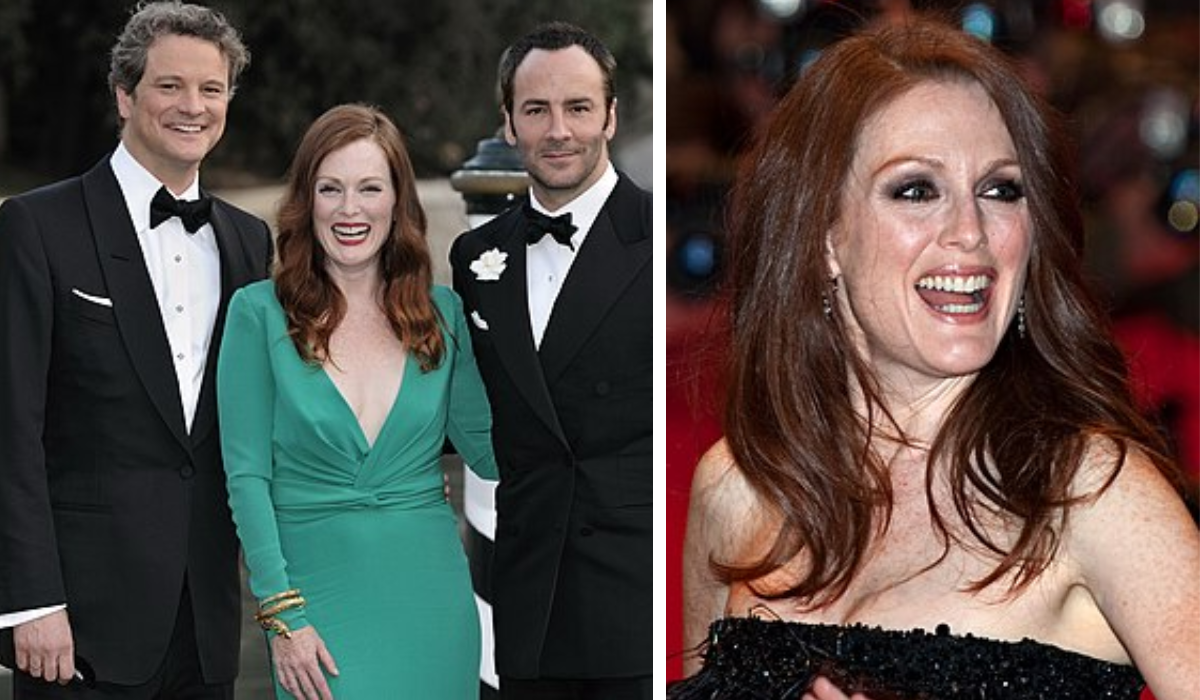
Julianne Moore is one of Hollywood’s most respected performers, celebrated for her emotional depth, versatility, and ability to bring complicated characters to life. Born Julie Anne Smith, she developed her craft through theater before establishing herself on television and film. Her career includes acclaimed dramas, major commercial productions, television projects, and memorable independent movies. From early appearances in soap operas to an Academy Award-winning performance, her journey reflects persistence and artistic ambition. Her work has earned major honors, including an Oscar, BAFTA, Golden Globes, Emmy Awards, and recognition at prestigious international film festivals.
| Quick Bio | Details |
|---|---|
| Full Name | Julie Anne Smith |
| Professional Name | Julianne Moore |
| Born | December 3, 1960 |
| Birthplace | Fayetteville, North Carolina, USA |
| Education | Boston University |
| Degree | B.F.A. in Acting |
| Profession | Actress, Producer, Author |
| Academy Award | Best Actress for Still Alice |
| Notable Films | Boogie Nights, The Hours, Far from Heaven, Still Alice, May December |
| Major TV Role | Game Change |
Early Life and Family Background
Julianne Moore was born on December 3, 1960, in Fayetteville, North Carolina, and spent much of her childhood moving because her father served in the military. Her mother was a social worker, while her father was a paratrooper, colonel, and later military judge. Growing up in different locations exposed her to varied environments and experiences. Those years helped shape her observant personality and understanding of different people. Her internationally influenced childhood later became an interesting part of her personal story and helped distinguish her from many performers of her generation.
Education and Acting Training
Julianne Moore studied acting at Boston University, where she earned a Bachelor of Fine Arts degree from the School of the Performing Arts. Her formal education provided a strong foundation for her future career and helped develop her understanding of character, dialogue, movement, and performance. After graduating in 1983, she moved to New York and pursued theater work. Her stage experience became particularly valuable because it gave her an opportunity to develop confidence before facing the wider demands of television and cinema.
Choosing the Name Julianne Moore
The actress was born Julie Anne Smith, but she adopted the professional name Julianne Moore after discovering that another actress already had a similar name. The decision was practical, but it eventually became attached to one of the most recognizable careers in modern American cinema. Her professional identity developed alongside her growing reputation as a serious performer. The name soon became associated with sophisticated dramas, challenging characters, independent cinema, and major Hollywood productions. Her transition from Julie Anne Smith to her professional identity marked an important early step in her entertainment journey.
Early Theater Career
Before becoming a major film star, Julianne Moore worked extensively in theater and appeared in productions connected with New York’s stage community. Her early performances included work in plays such as Serious Money and Ice Cream With Hot Fudge, as well as an appearance as Ophelia in Hamlet at the Guthrie Theater. Theater taught her to rely heavily on preparation and emotional discipline. These experiences strengthened her acting technique and helped establish the foundation for the naturalistic style that later became one of her most admired qualities.
Television Breakthrough
Julianne Moore entered television during the 1980s, appearing on The Edge of Night before gaining greater recognition on As the World Turns. From 1985 to 1988, she played the half-sisters Frannie and Sabrina. Her performances earned her a Daytime Emmy Award for Outstanding Ingenue in a Drama Series in 1988. Television gave her valuable professional experience and introduced her to a broad audience. More importantly, it demonstrated that she could handle demanding dramatic material while developing characters consistently over extended storylines.
First Film Experiences
Her early film career included Tales from the Darkside: The Movie, released in 1990. Although the project was far removed from the prestige dramas for which she later became famous, it provided an important entry into cinema. She continued accepting varied roles while building her reputation gradually rather than becoming an overnight sensation. This period allowed her to experiment with different genres and filmmakers. Her willingness to work across television, theater, and film eventually became a defining feature of her career and helped prepare her for more ambitious opportunities.
Breakthrough With Short Cuts
A major turning point came with Robert Altman’s Short Cuts in 1993. The film brought together a large ensemble and gave Moore an opportunity to demonstrate unusual dramatic confidence. Her performance attracted critical attention and helped establish her as an actress capable of handling complex adult characters. The project also introduced her more strongly to the world of respected independent filmmaking. From this point onward, she increasingly became associated with ambitious directors and scripts that explored relationships, identity, social pressure, and emotional conflict.
Safe and Artistic Recognition
Todd Haynes’ Safe became another important milestone in Julianne Moore’s development as a leading dramatic performer. She portrayed a woman whose life becomes increasingly affected by mysterious illness and isolation. The film demanded restraint rather than traditional melodrama, allowing Moore to communicate anxiety through subtle expressions and physical behavior. Her performance demonstrated her ability to make internal conflict visible without relying on excessive dialogue. Safe strengthened her reputation among critics and helped establish a creative partnership with Haynes that would continue in later projects.
Boogie Nights Success
In 1997, Julianne Moore appeared in Paul Thomas Anderson’s Boogie Nights, playing Amber Waves, a veteran adult-film performer with a complicated emotional life. The role became one of her most celebrated early performances and earned her an Academy Award nomination for Best Supporting Actress. Moore brought vulnerability, warmth, and sadness to a character who could easily have been portrayed superficially. Her performance showed that she could transform unconventional roles into deeply human portraits. The film also helped move her career toward major awards recognition.
The Lost World: Jurassic Park
Alongside independent and critically acclaimed films, Julianne Moore also demonstrated her commercial appeal in The Lost World: Jurassic Park. Directed by Steven Spielberg, the blockbuster gave her exposure to a much larger international audience. Her role as Dr. Sarah Harding allowed her to combine intelligence, determination, and physical action within a major adventure production. The success of the movie proved that Moore could work effectively in large-scale entertainment while maintaining credibility as a serious dramatic actress. It also broadened the range of projects associated with her name.
Magnolia and The End of the Affair
The late 1990s brought several significant performances, including roles in Magnolia and The End of the Affair. In Magnolia, she worked again with Paul Thomas Anderson, contributing to the film’s emotionally intense ensemble. The End of the Affair earned her another Academy Award nomination for Best Actress. These projects reinforced her reputation for choosing characters with psychological complexity. Her performances were increasingly recognized for their emotional intelligence, precision, and willingness to explore difficult personal situations without simplifying them for the audience.
Far From Heaven
Far from Heaven became one of the defining films of Julianne Moore’s career. Directed by Todd Haynes, the 2002 drama examined race, sexuality, marriage, and social expectations through a carefully constructed period setting. Moore played Cathy Whitaker, a woman confronting painful realities beneath an apparently perfect suburban life. Her performance earned an Academy Award nomination and widespread critical praise. The role demonstrated her ability to communicate emotional repression and social pressure with remarkable subtlety. The film remains an important example of her work with sophisticated filmmakers and challenging themes.
The Hours and Major Recognition
Another major achievement came with The Hours, where Julianne Moore appeared alongside Nicole Kidman and Meryl Streep. The film explored the interconnected lives of several women and required its performers to portray complicated emotional experiences. Moore received an Academy Award nomination for Best Supporting Actress for her performance. Her involvement in both The Hours and Far from Heaven during the same period demonstrated the extraordinary range of her work. She could move between different historical settings and psychological perspectives while maintaining a distinctive but adaptable acting style.
Television Excellence in Game Change
Julianne Moore returned to television in a major way with HBO’s Game Change, portraying political figure Sarah Palin. Her performance earned the Primetime Emmy Award for Outstanding Lead Actress in a Miniseries or Movie in 2012. The role required extensive transformation and careful attention to public mannerisms. Moore approached the character with detail while keeping the performance grounded in dramatic storytelling. The Emmy victory confirmed that her abilities extended beyond cinema and that she could deliver award-caliber work in television productions.
The Kids Are All Right
In The Kids Are All Right, Julianne Moore played Jules, a mother navigating family relationships and personal uncertainty. The film combined comedy and drama while examining modern family dynamics. Moore’s performance showed her talent for making flawed characters sympathetic and believable. She shared the screen with Annette Bening, Mark Ruffalo, and a talented ensemble. The movie earned significant awards attention and became another important example of her ability to balance humor with emotional seriousness. Her work in the film demonstrated that mature characters could remain commercially accessible without sacrificing complexity.
Still Alice and the Oscar
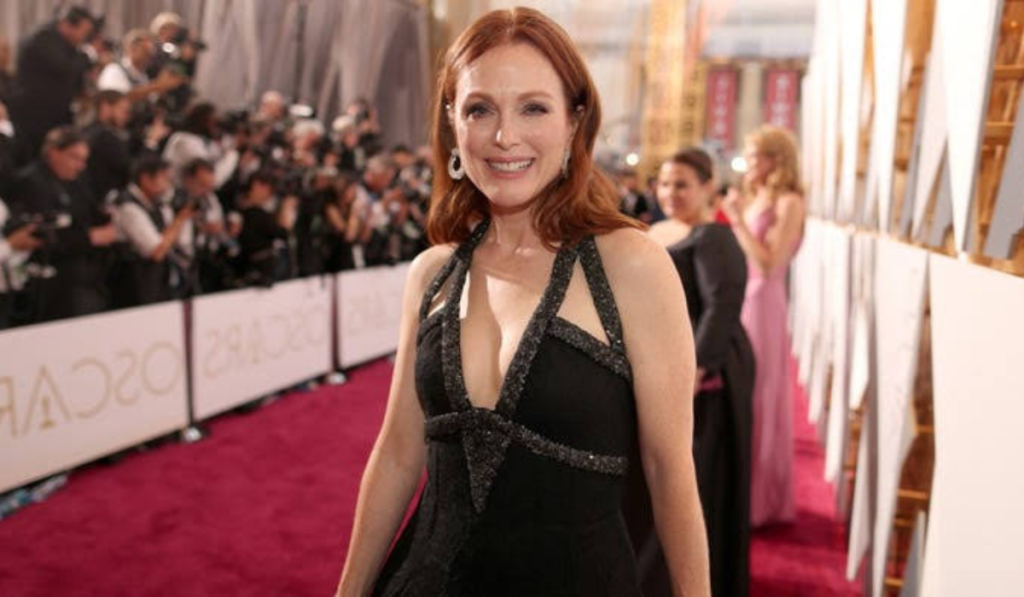
The most celebrated achievement of Julianne Moore’s career came with Still Alice, released in 2014. She portrayed Alice Howland, a professor diagnosed with early-onset Alzheimer’s disease. The performance required a gradual portrayal of cognitive changes and emotional loss. Moore received the Academy Award for Best Actress, along with a BAFTA and Golden Globe for the role. Her performance was praised for its sensitivity and restraint. The Oscar represented the culmination of years of acclaimed work and established one of the most important milestones in her professional life.
Cannes Film Festival Achievement
Julianne Moore has also achieved international recognition outside the major American awards system. At the 2014 Cannes Film Festival, she won the Best Actress award for Maps to the Stars, directed by David Cronenberg. The honor added an important international distinction to her already impressive career. Cannes recognition is particularly significant because the festival is one of the most influential institutions in world cinema. Moore’s success there reflected her ability to connect with filmmakers and audiences beyond Hollywood and reinforced her reputation as a globally respected performer.
The Hunger Games Franchise
Moore also reached younger and broader audiences through The Hunger Games franchise. She portrayed President Alma Coin in Mockingjay – Part 1 and Mockingjay – Part 2. The role placed her within a large-scale franchise alongside an internationally popular ensemble. Her presence added dramatic authority to the futuristic political story. Participating in commercially successful films demonstrated the flexibility of her career choices. She has repeatedly moved between independent cinema, prestige dramas, television, and mainstream entertainment, showing that artistic credibility and commercial visibility can coexist.
Work With Acclaimed Directors
Throughout her career, Julianne Moore has collaborated with major directors including Robert Altman, Paul Thomas Anderson, Todd Haynes, Steven Spielberg, Alfonso Cuarón, and other influential filmmakers. These collaborations reveal a consistent interest in strong scripts and distinctive creative voices. She has appeared in films that explore psychological, social, political, and family themes. Her ability to adapt to different directing styles has contributed greatly to her longevity. Rather than being associated with one specific genre, she has developed a career defined by variety, preparation, and a willingness to accept demanding material.
May December and Recent Acclaim
In May December, Julianne Moore portrayed Gracie Atherton-Yoo, a woman whose complicated past becomes the focus of an actress researching her life. The 2023 film premiered in competition at Cannes and brought Moore another major showcase for her dramatic abilities. Her performance received awards attention, including a Critics Choice nomination for Best Supporting Actress. The project demonstrated that she continued taking psychologically demanding roles decades into her career. Her ability to remain relevant across different generations of filmmaking is one of the strongest indicators of her lasting artistic influence.
The Room Next Door
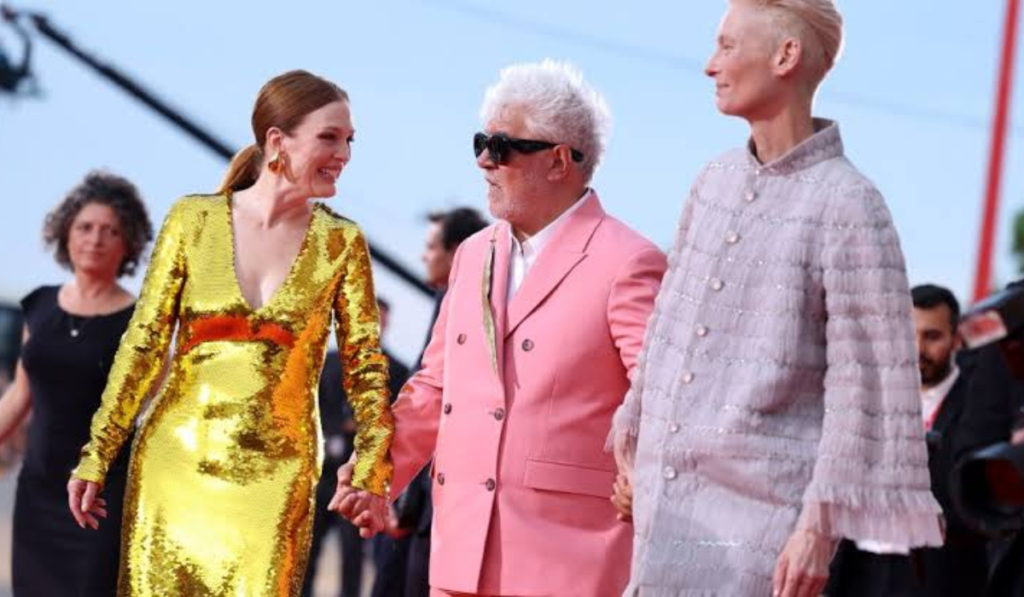
Moore continued her international film work with Pedro Almodóvar’s The Room Next Door. The project paired her with another acclaimed performer, Tilda Swinton, and further expanded her association with globally respected cinema. Moore’s willingness to work with filmmakers from different cinematic traditions has helped her maintain an unusually diverse filmography. Her later career demonstrates that she remains interested in new creative challenges rather than simply repeating the style of roles that first made her famous. This commitment to exploration has kept her work culturally relevant.
Mary & George and Television
The limited series Mary & George added another notable television performance to Moore’s career. The historical drama allowed her to explore a powerful and ambitious character in a period setting. Her work on television has repeatedly demonstrated her ability to adapt to long-form storytelling, where characters can develop across several episodes. From daytime television to prestigious limited series, her screen career reflects remarkable versatility. Her continued television presence also shows how modern performers can move fluidly between film and streaming-era productions without being restricted to one medium.
Writing Career and Children’s Books
Beyond acting, Julianne Moore has developed a successful career as a children’s book author. Her Freckleface Strawberry books explore themes of individuality, confidence, friendship, and accepting differences. The stories have become another way for her to communicate with younger audiences. Her writing work demonstrates a creative side that is separate from her film performances. Instead of limiting her professional identity to acting, she has explored storytelling through literature. This broader artistic interest has helped create a legacy that reaches beyond cinema and into family-oriented publishing.
Family Life and Personal Values
Julianne Moore has generally maintained a balance between public professional success and private family life. She married filmmaker Bart Freundlich in 2003, and they have two children. The couple has also worked together professionally, including on film projects. Moore has spoken publicly about aspects of family, aging, and personal experiences, but she has generally avoided turning every part of her private life into entertainment. Her approach reflects a broader effort to maintain personal boundaries while remaining active in a highly public profession.
Awards and Career Honors
The awards record of Julianne Moore is extensive, including an Academy Award, BAFTA, Golden Globes, Emmy Awards, and recognition from Cannes and other major organizations. IMDb lists 119 wins and 208 nominations across her career, illustrating the breadth of industry recognition she has received. Her awards span film, television, critics’ groups, and international festivals. This range is significant because it reflects appreciation from different parts of the entertainment world. Her career has therefore been recognized not simply for popularity but for sustained artistic achievement.
Acting Style and Screen Presence
One of the most admired qualities of Julianne Moore is her ability to make complicated emotions appear natural rather than theatrical. She frequently uses subtle expressions, pauses, voice changes, and restrained physical movements to reveal what characters are experiencing internally. Her performances often avoid simple heroes and villains, instead presenting people with contradictions and vulnerabilities. This approach makes her characters feel believable. Whether playing a mother, professor, political figure, socialite, or troubled individual, she adapts her performance to the emotional demands of the story.
Influence on Modern Cinema
Julianne Moore has influenced modern cinema through a career built around character-driven storytelling. She has repeatedly accepted roles that challenge traditional expectations about women, family, aging, sexuality, identity, and social pressure. Her filmography demonstrates that mature female characters can be central to complex and commercially visible stories. She has also helped bridge independent filmmaking and mainstream entertainment. Her collaborations with respected directors have contributed to some of the most discussed films of the past several decades, making her an important figure in contemporary American acting.
Why Her Career Remains Inspiring
The story of Julianne Moore is inspiring because her success developed through steady professional growth rather than a single breakthrough. She moved from theater to television, then independent cinema, major studio productions, international festivals, and award-winning television. Along the way, she accepted challenging characters and continued developing her craft. Her journey demonstrates the value of patience, preparation, adaptability, and artistic courage. Rather than depending on one type of role, she built a diverse body of work that has remained relevant across multiple generations of audiences and filmmakers.
Lasting Hollywood Legacy
Julianne Moore’s legacy rests on more than an Oscar or a collection of famous movies. Her career represents decades of disciplined acting, intelligent role selection, and collaboration with influential filmmakers. From Short Cuts and Boogie Nights to Still Alice and May December, her performances have repeatedly demonstrated emotional intelligence and versatility. She has also succeeded in television, theater, and children’s literature. Her achievements show why she remains one of the most respected performers of her generation. Her continuing creative work suggests that her influence will remain important in cinema for years to come.
Frequently Asked Questions
- What is Julianne Moore best known for? – She is best known for acclaimed films such as Boogie Nights, The Hours, Far from Heaven, Still Alice, and May December.
- Did Julianne Moore win an Oscar? – Yes, she won the Academy Award for Best Actress for Still Alice in 2015.
- When was Julianne Moore born? – She was born on December 3, 1960, in Fayetteville, North Carolina.
- What did she win an Emmy for? – She won the 2012 Primetime Emmy for Outstanding Lead Actress in a Miniseries or Movie for Game Change.
- What award did she win at Cannes? – She received the 2014 Best Actress award at Cannes for Maps to the Stars.
For additional background, filmography details, and related information, readers can explore the Wikipedia page on Julianne Moore and its related filmography resources.