
 admin
admin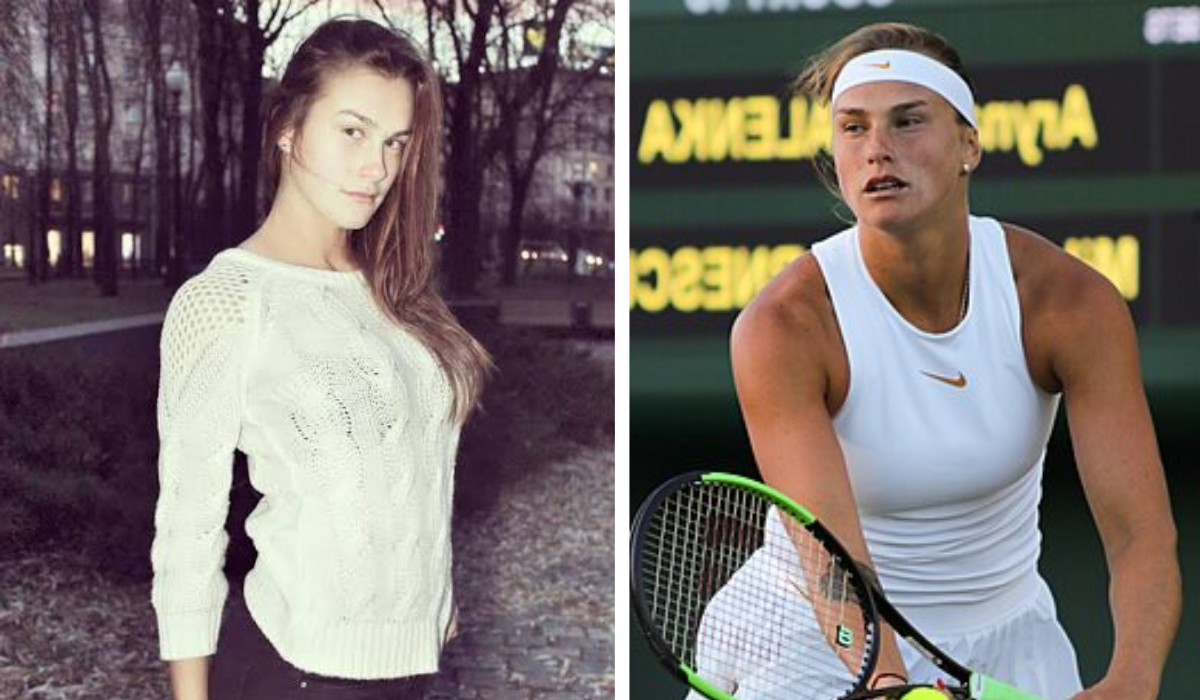
Aryna Sabalenka has become one of the most recognizable names in modern women’s tennis. Born on May 5, 1998, in Minsk, Belarus, she developed into a powerful competitor whose aggressive style, resilience, and determination have carried her to the top of the WTA rankings. By 2026, she had established herself as a four-time Grand Slam singles champion and a consistent presence in major finals. The WTA lists her as the current world No. 1, while her career record includes 24 singles titles. Her rise reflects years of hard work, technical adjustments, and mental growth.
Early Life and Family Background
The story of Aryna Sabalenka began in Belarus, where she was introduced to tennis at a young age. Her athletic potential became increasingly obvious as she progressed through junior competition and began building a professional pathway. Rather than relying on a traditional early Grand Slam breakthrough, she developed through international tournaments and demanding matches. Her background helped shape a competitive personality that values persistence and self-belief. Those qualities later became central to her professional identity, especially when she faced difficult periods involving confidence, consistency, and the pressure of competing against established champions.
Quick Bio of Aryna Sabalenka
| Detail | Information |
|---|---|
| Full name | Aryna Siarhiejeŭna Sabalenka |
| Birth date | May 5, 1998 |
| Birthplace | Minsk, Belarus |
| Nationality | Belarusian |
| Height | About 1.82 m |
| Playing hand | Right-handed |
| Professional status | Professional tennis player |
| Current singles ranking | World No. 1 |
| Grand Slam singles titles | 4 |
| Career singles titles | 24 |
| Major strengths | Power, serve, aggressive baseline play |
Professional Tennis Breakthrough
Aryna Sabalenka entered the wider tennis spotlight as a fearless player capable of challenging higher-ranked opponents. Her explosive groundstrokes immediately gave her an intimidating presence, but early success also came with inconsistency. She sometimes produced too many unforced errors and struggled to control matches when her first-strike game was not working. Instead of abandoning her natural aggression, she gradually learned to manage it. That development became one of the defining themes of her career. Her breakthrough showed that raw power could become a complete winning strategy when combined with better movement, shot selection, and emotional discipline.
Rise Into the WTA Top 10
The rise of Aryna Sabalenka through the WTA rankings demonstrated how quickly elite-level confidence can change a player’s career. Her results against leading opponents helped her establish herself among the world’s best. She became especially dangerous on hard courts, where her serve and powerful forehand could dictate rallies. Her ranking progress also reflected improved consistency across tournaments rather than dependence on one standout week. As her experience increased, she became more comfortable handling pressure in later rounds. That progression laid the foundation for repeated Grand Slam runs and eventually helped her reach the No. 1 ranking.
Powerful Playing Style
Aryna Sabalenka is widely recognized for a high-risk, high-reward style built around aggressive serving and heavy baseline shots. Her ability to strike the ball with exceptional pace allows her to shorten rallies and put opponents under immediate pressure. She can attack from both wings, especially when she receives a manageable second serve or a shorter ball. Her style is not simply about hitting hard, however. Modern success has required better rally construction, improved defensive movement, and greater patience. When those elements work together, her power becomes one of the most difficult tactical problems on the women’s tour.
Serve and Return Improvements
One of the most important parts of Aryna Sabalenka’s development has been her work on the serve. Earlier in her career, double faults and service inconsistency sometimes undermined otherwise dominant performances. She worked on her delivery and rhythm, producing a more reliable weapon without losing its pace. The improvement became particularly visible around her breakthrough Grand Slam success. Her return game also developed into a major asset because she can attack second serves and immediately seize court position. Together, a stronger serve and aggressive return strategy have helped her control matches before opponents can establish comfortable rallies.
First Grand Slam Triumph
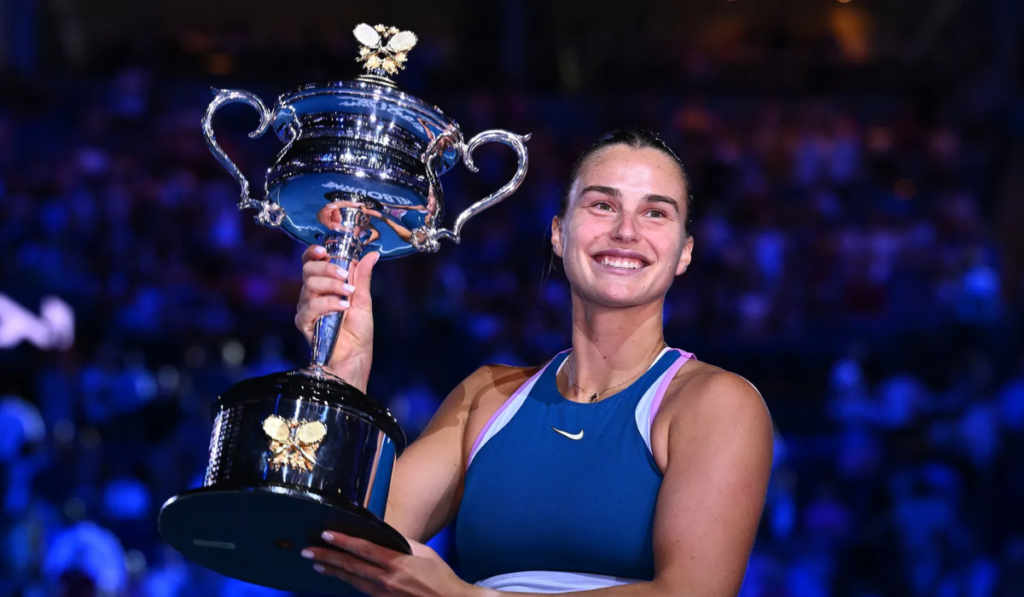
The first major championship of Aryna Sabalenka arrived at the 2023 Australian Open, an achievement that changed the direction of her career. She defeated Elena Rybakina in a tense final after recovering from losing the opening set. The victory was significant because it demonstrated that she could manage a Grand Slam final rather than merely produce spectacular tennis in earlier rounds. It also rewarded the technical and mental work she had undertaken after previous disappointments. Winning a first major often changes a player’s belief, and the Melbourne breakthrough gave her greater confidence in the biggest matches.
Australian Open Success
Aryna Sabalenka later returned to the Australian Open and successfully defended her women’s singles title in 2024. She defeated Zheng Qinwen in the final in straight sets, becoming a repeat champion in Melbourne. The achievement confirmed that her first major victory was not a one-time breakthrough. She had developed the consistency required to navigate a demanding two-week tournament and maintain intensity through multiple rounds. The Australian Open became closely associated with her hard-court strengths, while her repeated success there strengthened her reputation as one of the leading power players of her generation.
Historic 2024 Season
The 2024 season was especially important for Aryna Sabalenka because she combined Grand Slam success with strong performances across the wider WTA calendar. She won the Australian Open and US Open, giving her two major championships in the same season. She also captured titles in Cincinnati and Wuhan, adding further evidence of her consistency. Her performance against elite opponents showed an increasingly complete game. The year strengthened her position near the top of the rankings and helped establish a broader legacy beyond individual tournaments. It was a season defined by confidence, resilience, and the ability to recover from setbacks.
US Open Championship
Aryna Sabalenka’s US Open success became another major chapter in her career. She won the New York title in 2024 and then defended it in 2025, defeating Amanda Anisimova in the 2025 final. The WTA reported that her 2025 season included four titles and a tour-leading 63 match wins, while she finished the year at No. 1 for a second consecutive season. These achievements showed how effectively she had combined explosive tennis with sustained weekly performance. New York became a particularly important stage for her because the fast hard courts reward her serve, return pressure, and ability to attack early in rallies.
World No. 1 Achievement
Reaching world No. 1 was a defining milestone for Aryna Sabalenka. Holding the top ranking requires more than winning one major; it demands high-level results across the entire season. Her consistency allowed her to remain at the summit while continuing to challenge for Grand Slam trophies. In July 2026, the WTA reported that she had reached 100 weeks at No. 1, joining an elite group of women who had sustained that level of dominance. The milestone illustrates the difference between becoming the best-ranked player temporarily and maintaining elite standards over a long period.
2025 Season and Continued Dominance
Aryna Sabalenka produced one of the strongest seasons of her career in 2025. She won four titles, including Brisbane, Miami, Madrid, and the US Open, while reaching nine finals. The WTA also recorded 63 tour match wins and a tour-leading season prize-money figure of more than $15 million. She ended the season as world No. 1 for the second straight year. These numbers demonstrate her consistency across different stages of the calendar. Even when she did not win a tournament, frequent deep runs kept her ranking and confidence strong, allowing her to enter major events as a leading contender.
2026 Australian Open Final
The 2026 Australian Open gave Aryna Sabalenka another major opportunity, but the final ended in disappointment. Elena Rybakina defeated her in three sets to win the championship. Despite the loss, reaching another Grand Slam final underlined her remarkable consistency at Melbourne Park. The Australian Open’s official honor roll records Rybakina as the 2026 champion and Sabalenka as runner-up. The result also demonstrated an important part of elite sport: even a dominant player must handle setbacks and find ways to respond. For a world No. 1, the next challenge is often turning a difficult loss into motivation.
Miami Open and Sunshine Double
Aryna Sabalenka responded strongly in the United States during the 2026 hard-court swing. She won the Miami Open final against Coco Gauff and completed the Sunshine Double after also winning Indian Wells. The WTA described the Miami victory as her 24th career WTA singles title and noted that she became the first woman since 2022 to complete the Sunshine Double. These achievements added another significant chapter to her hard-court résumé. Winning consecutive major WTA events requires physical endurance, tactical adaptability, and the ability to manage pressure across different opponents.
French Open Challenge
At Roland Garros in 2026, Aryna Sabalenka continued to demonstrate her growing consistency at Grand Slam tournaments. She defeated Naomi Osaka in the quarterfinal stage after a competitive match and reached another deep run in Paris. Clay has traditionally demanded more patience from power players because rallies can become longer and movement becomes crucial. Her progress on the surface shows that she has worked to broaden her game beyond fast hard courts. Although the French Open presents different tactical challenges, her improved construction and defensive skills make her increasingly difficult to defeat on slower courts.
Grass-Court Difficulties
Grass has presented a different challenge for Aryna Sabalenka because the surface rewards quick reactions, low bounces, and precise movement. Her power remains valuable, but players must also adapt their footwork and timing. The 2026 grass season did not produce the same level of success as her strongest hard-court campaigns. Wimbledon disappointment highlighted the importance of balance between aggression and control. Such setbacks can become useful learning experiences because elite athletes constantly adjust their approach. Her ability to evaluate difficult stretches without losing confidence remains one of the reasons she has stayed among the sport’s leading players.
Rivalries With Elite Players
Aryna Sabalenka has built major rivalries with several leading stars, including Iga Swiatek, Coco Gauff, Elena Rybakina, and Naomi Osaka. These matchups are compelling because each opponent presents a different tactical challenge. Swiatek brings movement and relentless pressure, Gauff combines athleticism with improving all-court skills, Rybakina counters with exceptional serving and clean ball striking, while Osaka possesses major-event experience and powerful baseline tennis. Regular meetings with elite opponents have pushed Sabalenka to expand her tactical options. These rivalries have also helped define the competitive landscape of women’s tennis in the 2020s.
Mental Strength and Resilience
Mental resilience has become one of the most important qualities in Aryna Sabalenka’s career. Early struggles with double faults and emotional pressure could have limited her progress, yet she continued working on her game. Her Grand Slam victories demonstrate the value of learning from difficult moments rather than allowing them to become permanent weaknesses. She has also shown an ability to reset during matches, especially when a powerful opponent disrupts her rhythm. That mental development complements her physical talent. At the highest level, confidence does not mean avoiding mistakes; it means recovering quickly enough to keep competing for the next point.
Training and Fitness
Aryna Sabalenka’s tennis requires exceptional physical preparation because her style depends on explosive movement and powerful rotation. Strong legs, core stability, shoulder strength, and cardiovascular conditioning all support her ability to serve hard and attack from the baseline. Fitness also matters during long Grand Slam matches when fatigue can affect footwork and shot selection. Her continued presence in late tournament rounds suggests a professional approach to conditioning and recovery. Modern tennis is increasingly physical, and players who combine strength with mobility can maintain their performance over long seasons. Her athletic preparation supports the aggressive identity that defines her game.
Career Titles and Records
Aryna Sabalenka has collected an impressive list of accomplishments. According to the WTA, she entered 2026 with four Grand Slam singles titles and added further tournament success during the season. She has also won WTA 1000 events and accumulated substantial tour-level victories. Her achievements extend beyond singles because she previously reached the top of the doubles rankings and has won major doubles honors. This versatility shows that her tennis ability is not limited to one format. Her records continue to develop as she competes through the 2026 season, giving her opportunities to add more milestones.
Popularity and Global Influence
The popularity of the Belarusian star extends beyond tournament results. Her powerful personality, energetic celebrations, and recognizable playing style have made her a major attraction for tennis audiences. Fans often respond to the combination of intensity and authenticity she brings to competition. Her success has also helped increase attention on women’s tennis by creating memorable rivalries and high-profile matches. As a world No. 1, she carries greater visibility at tournaments, media events, and promotional activities. That platform gives her an opportunity to influence younger players who admire her willingness to compete aggressively while continuing to improve weaknesses.
Approach to Pressure
The Belarusian star has learned that pressure is part of being a champion. Every Grand Slam appearance brings expectations, particularly when a player enters as the defending champion or top-ranked competitor. Managing those expectations requires emotional control, preparation, and acceptance that not every tournament will end with a trophy. Her career shows a gradual shift from trying to overpower every opponent toward understanding when to accelerate and when to construct points. That tactical maturity can be as valuable as another technical improvement because major championships are often decided during moments when patience matters as much as power.
2026 US Open Ambitions
The 2026 US Open represents another major opportunity for the Belarusian star. The WTA announced that she entered the tournament as the world No. 1 and two-time reigning champion, giving her a chance to become the first woman since Serena Williams to win three consecutive US Open singles titles. The challenge is substantial because the field includes several former champions and other elite contenders. Her preparation will need to combine health, confidence, and tactical discipline. New York has already been one of the defining stages of her career, making the 2026 tournament especially important for her continuing legacy.
Legacy in Modern Tennis
The legacy of the Belarusian star is increasingly connected with the evolution of power tennis in the women’s game. She represents a generation of players who can combine extraordinary pace with sophisticated tactical development. Her journey also demonstrates that elite success is rarely immediate. Technical changes, mental growth, difficult losses, and repeated opportunities have all contributed to her position at the top. With four Grand Slam singles titles and extended periods as world No. 1, she has already built a substantial résumé. Future seasons will determine how high her final career achievements can rise, but her influence is already significant.
Lessons From Her Journey
The career of the Belarusian star offers several lessons for athletes and fans. First, natural talent becomes more valuable when supported by deliberate improvement. Second, setbacks can reveal weaknesses that need attention rather than proving that a player cannot succeed. Third, consistency matters because championships and rankings are built over many matches. Her progression from an explosive but inconsistent competitor to a multiple Grand Slam champion illustrates the power of long-term development. Her story encourages young athletes to remain patient, accept coaching, and continue refining their strengths while addressing the technical and mental areas that hold them back.
Future Goals and Potential
The Belarusian star still has significant opportunities ahead. At 28, she remains in a strong stage of her professional career, and her ranking, experience, and major titles provide a powerful foundation. More Grand Slam trophies, additional WTA 1000 championships, and further weeks at No. 1 are realistic targets. She may also continue developing her clay and grass-court results to create an even more complete résumé. Her future will depend on staying healthy, managing a demanding schedule, and adapting as younger rivals improve. The next chapters could determine whether her career moves from elite success toward historic greatness.
Why Fans Admire Her
Many fans admire the Belarusian star because her tennis combines spectacle with determination. A single serve or forehand can completely change the direction of a rally, while her emotional energy makes important matches feel dramatic. At the same time, her willingness to acknowledge mistakes and continue competing makes her relatable. Supporters can see both the extraordinary athlete and the person working through challenges. Her journey from early inconsistency to sustained championship success gives audiences a compelling story of growth. That combination of personality, power, and resilience has helped make her one of the defining tennis stars of her era.
Conclusion
The Belarusian star has built an inspiring career through power, persistence, and continuous improvement. From her early development in Belarus to becoming world No. 1 and a four-time Grand Slam champion, her journey shows how elite athletes transform weaknesses into strengths. Her Australian Open victories, US Open dominance, Miami success, and long ranking reign have created a remarkable résumé, while difficult losses continue to provide new challenges. As she enters another US Open campaign in 2026, her story remains unfinished. Readers seeking a broader reference can explore the related Wikipedia article for additional background and career details.
FAQs
- Who is Aryna Sabalenka? – She is a Belarusian professional tennis player and current world No. 1.
- How many Grand Slam singles titles has she won? – She has won four Grand Slam singles titles.
- When did she win her first Grand Slam? – She won her first major at the 2023 Australian Open.
- What is her strongest playing surface? – Hard courts have produced many of her biggest victories.
- What is her major 2026 goal? – She is aiming to defend her US Open title and pursue a historic third straight championship.